@sjb007 said:
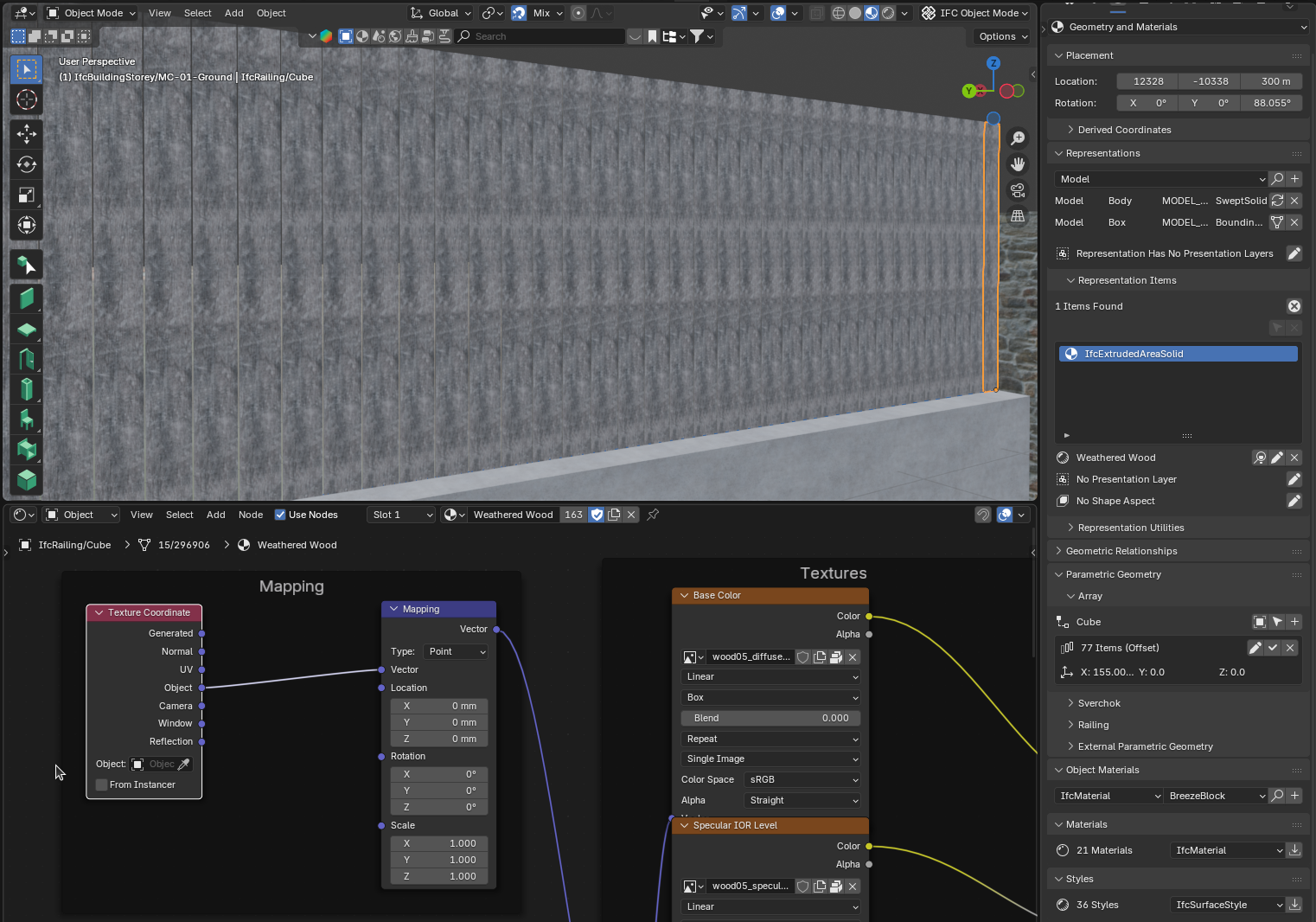
Sad face texturing:
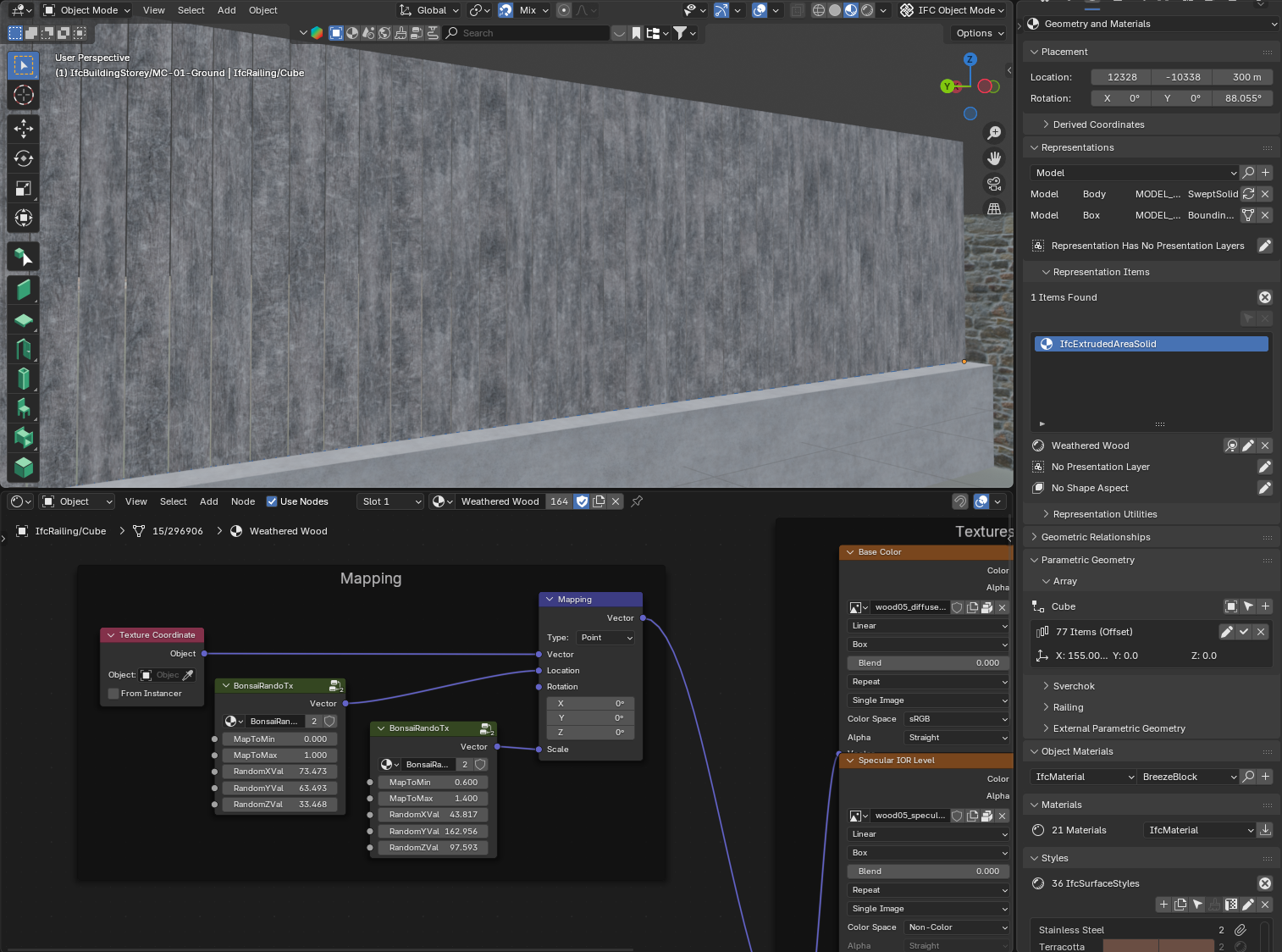
Happy face texturing:
You made my day.
Tiling Textures are so common and useful in AEC or ArchViz. (bricks, wood panels, concrete, plaster, ....)
But in most cases they look either totally boring - or, if they contain some visual detail - they will look terribly "tiled"anyway - no matter how perfectly "tile-able" they are.
In the past you had to render the whole surface and paint "dirt" on it. Later you add noise or superimposed textures at different scale. Now we have advanced randomize methods like in your example.
(Or best a procedural texture, but so far I was not that successful to create a e.g. reasonably looking concrete material that way ...)
But so far I thought render material control in IFC will stay pretty limited (should not necessarily need to be in Bonsai, if it would better act together (IFC + Blend) with Blender. OK we can overwrite IFC materials with Blender Materials in a Blend File.
I think we need a proper Asset library for typical building materials used in AEC.
Yeah, my usecase was really susceptible to repeating patterns. Just using Obj. Info Location to Mapping Location looked like:
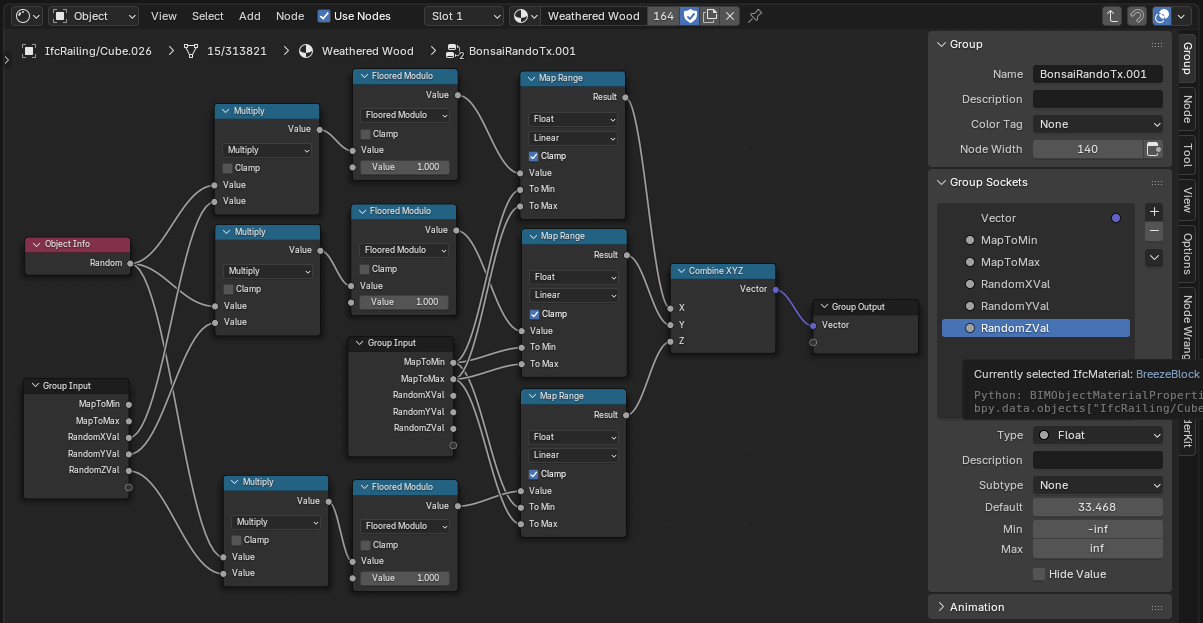
I had similar issues just using Random on it's own. It needed maths! to make it properly random. The node setup looks a bit convoluted, but it gave a near perfect result in this case.
@zoomer Yeah, these external Blender-only textures will not travel well. The sense I get from things I've read around here is that the rendering and realism of texturing was never ranked highly on the vast list of requirements for IFC up to 4, so it's a bit basic. Now they are talking about IFC 5 using usd as the underlying format, which would probably mean having access to full PBR materials with MaterialX. I suspect that is quite a long way down the road though.
Interesting.
USD and PBR would be great.
I didn't know MaterialX, looks great. I thought Apple had something else for PBR when they announced their open USD strategy. But maybe it was MaterialX .....
How long it took from IFC 2x3 to IFC 4, 10-15 years (?)
(And was there ever a IFC 3 ?)
As I learned from the other thread, that IFC 5 may be USD and Blender starts to support USD, maybe that would finally unity Bonsai and Blender. I mean compatibility and feature wise, with Bonsai as the BIM coordination and authoring GUI.
And so maybe Bonsai can access all necessary Blender features.






Comments
very cool. was discussed here a little as well.
https://community.osarch.org/discussion/2865/tweak-a-shader-graph-so-that-the-texture-doesnt-repeat-exactly-from-object-to-object
You made my day.
Tiling Textures are so common and useful in AEC or ArchViz. (bricks, wood panels, concrete, plaster, ....)
But in most cases they look either totally boring - or, if they contain some visual detail - they will look terribly "tiled"anyway - no matter how perfectly "tile-able" they are.
In the past you had to render the whole surface and paint "dirt" on it. Later you add noise or superimposed textures at different scale. Now we have advanced randomize methods like in your example.
(Or best a procedural texture, but so far I was not that successful to create a e.g. reasonably looking concrete material that way ...)
But so far I thought render material control in IFC will stay pretty limited (should not necessarily need to be in Bonsai, if it would better act together (IFC + Blend) with Blender. OK we can overwrite IFC materials with Blender Materials in a Blend File.
I think we need a proper Asset library for typical building materials used in AEC.
Yeah, my usecase was really susceptible to repeating patterns. Just using Obj. Info Location to Mapping Location looked like:
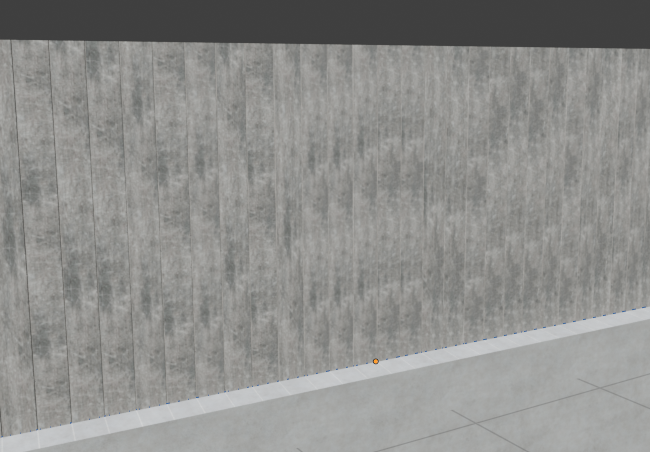
I had similar issues just using Random on it's own. It needed maths! to make it properly random. The node setup looks a bit convoluted, but it gave a near perfect result in this case.
@zoomer Yeah, these external Blender-only textures will not travel well. The sense I get from things I've read around here is that the rendering and realism of texturing was never ranked highly on the vast list of requirements for IFC up to 4, so it's a bit basic. Now they are talking about IFC 5 using usd as the underlying format, which would probably mean having access to full PBR materials with MaterialX. I suspect that is quite a long way down the road though.
Interesting.
USD and PBR would be great.
I didn't know MaterialX, looks great. I thought Apple had something else for PBR when they announced their open USD strategy. But maybe it was MaterialX .....
How long it took from IFC 2x3 to IFC 4, 10-15 years (?)
(And was there ever a IFC 3 ?)
hi @zoomer
:)
more than bSi, look at the actual implementation: how many projects in % still use 2x3?
I think the '3' in 2x3 is the '3' somehow
As I learned from the other thread, that IFC 5 may be USD and Blender starts to support USD, maybe that would finally unity Bonsai and Blender. I mean compatibility and feature wise, with Bonsai as the BIM coordination and authoring GUI.
And so maybe Bonsai can access all necessary Blender features.
So in 15 years or so .....